Is Solar Becoming Unaffordable in 2026?
Energy bills are climbing. Solar demand is surging. And yet, the cost of going solar is rising too. For homeowners who’ve been sitting on the fence about installing solar panels, 2026 is raising an uncomfortable question: is the window of affordability starting to close?
The short answer is: not yet, but the picture is more complicated than it used to be. To understand why, we need to look at both sides of the equation: the cost of installing solar, and the value it delivers once it’s on your roof.
The Demand Surge Is Real — and It’s Putting the Market Under Pressure
The UK solar market is booming. 2025 was officially a record year for solar installations, with almost 250,000 smaller-scale rooftop systems reported to the Microgeneration Certification Scheme (MCS) — smashing the previous record of 203,125 that had stood since 2011. More recently, following renewed gas price volatility in early 2026, Octopus Energy reported a significant spike in solar enquiries as homeowners looked for ways to reduce their reliance on the grid.
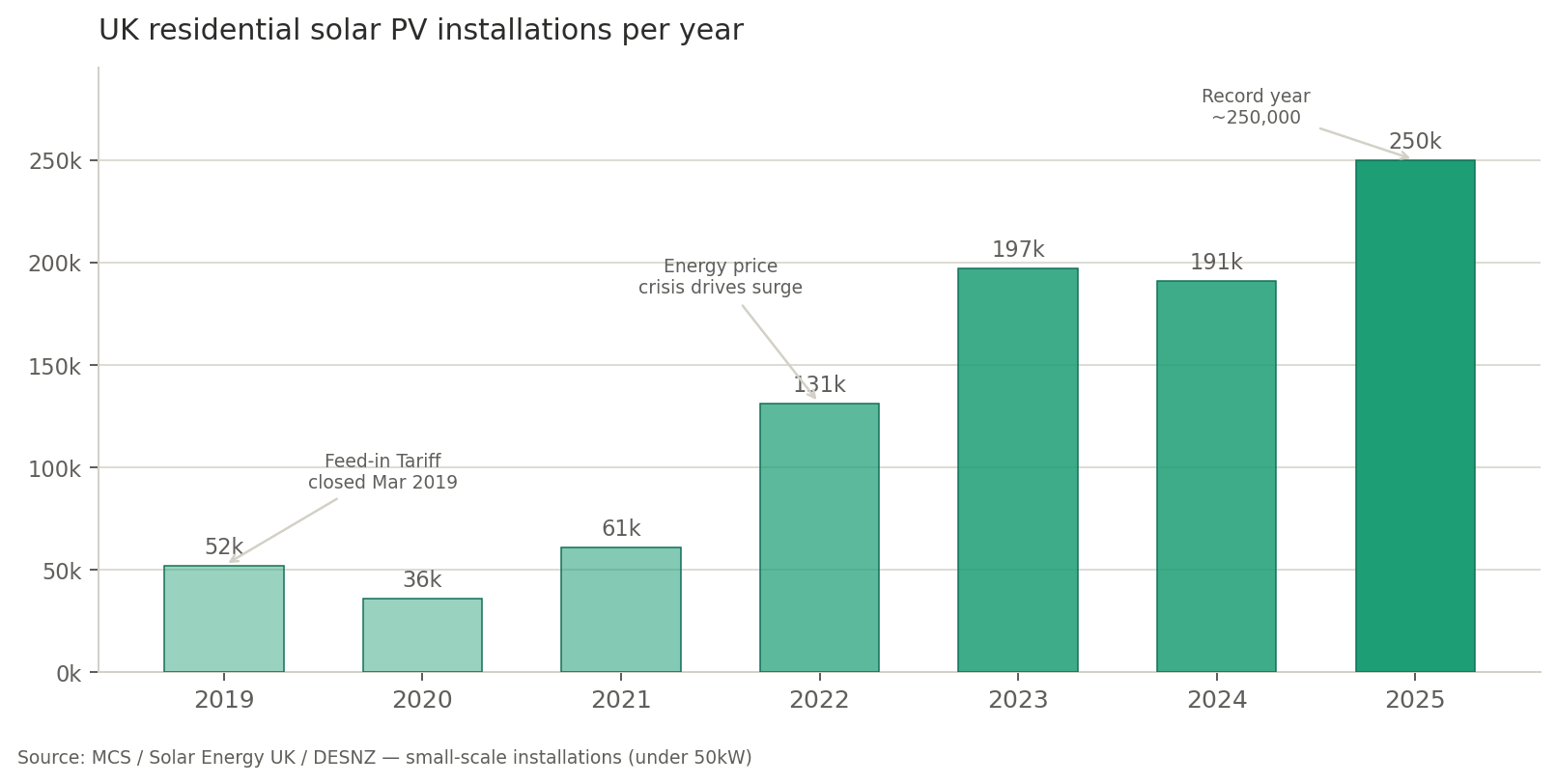
The reason is straightforward: people are worried about energy bills, and solar PV feels like one of the few things they can actually control. But whenever demand outpaces the industry’s ability to supply, prices rise. That’s not down to greed, it’s just how markets work. And right now, several parts of the solar supply chain are under pressure simultaneously.
Why Solar Is Getting More Expensive: Five Pressure Points
1. Labour Is the Biggest Bottleneck
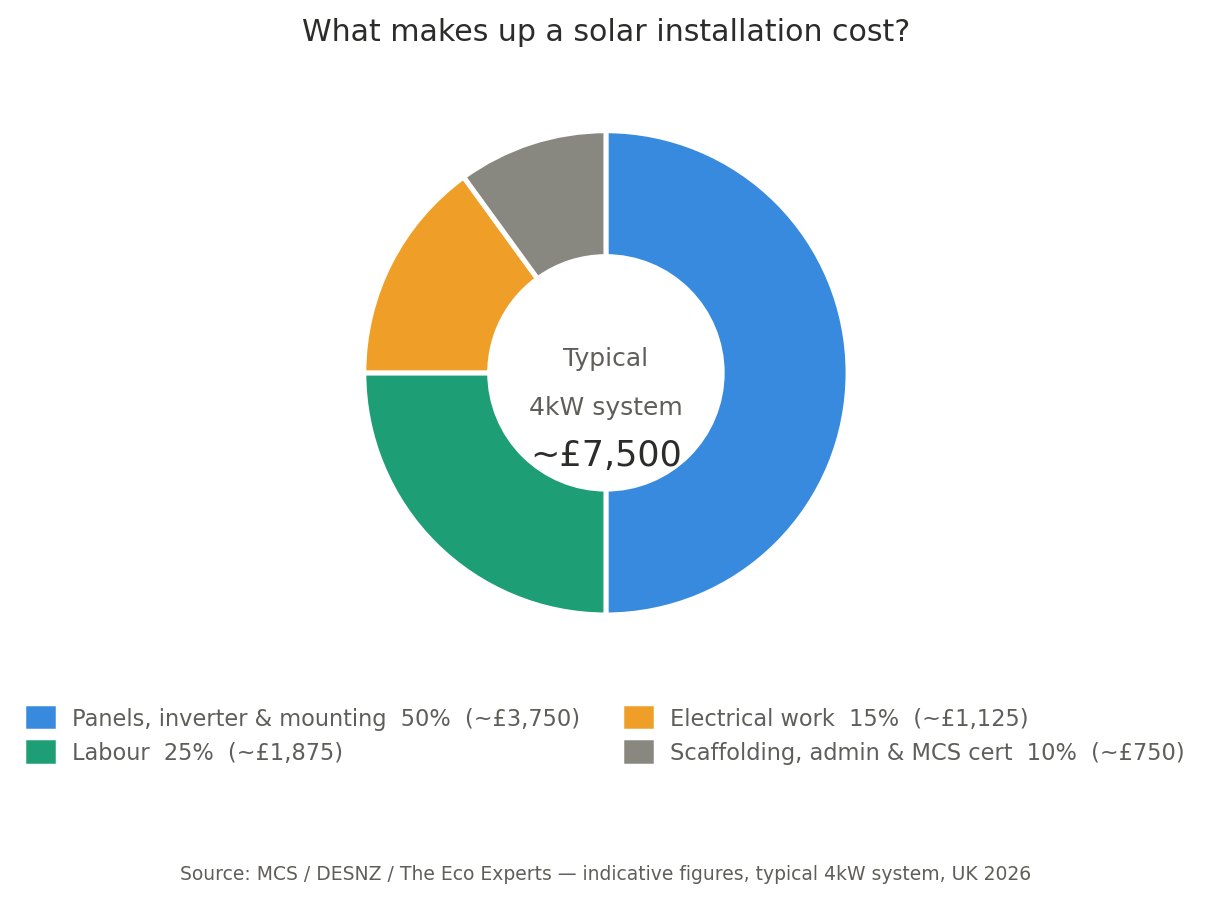
It’s easy to think of solar as a hardware purchase, you buy some panels, an inverter, perhaps even a battery. Someone bolts the panels to your roof and wires everything up, job done. But more than half the cost of a solar installation is actually labour: scaffolders, electricians, specialist roofers, and design engineers. These are skilled trades, and you simply can’t double that workforce overnight. Becoming an MCS-certified solar installer typically takes between 12 and 36 months depending on your background. Industry forecasts suggest wages in the sector will grow 5–7% annually through 2027 as demand stretches available capacity.
The result? The best installers get booked out. Lead times extend. And logistical costs such as scaffolding lorries, delivery vans, and component transport all creep upward as fuel costs feed through the system.
2. Global Supply Chains Are Under Strain
Panels, batteries, inverters, mounting systems, cabling - all of it comes through a global supply chain and the UK isn’t the only country desperate for this equipment. Every nation facing energy price volatility is having the same conversation about rooftop solar, meaning we’re competing for the same hardware at the same time.
Raw material costs have risen: copper, processed silicon, and the petrochemicals used in panel manufacturing have all increased in price. Manufacturers have responded by raising prices 5 - 10%, and those increases are passed down to installers and, ultimately, to homeowners. China’s adjustments to its export incentives for panels and batteries have added further pressure to global pricing.
3. Hardware Prices Have Stabilised - But May Not Stay That Way
There is good news here. According to government solar PV cost data, the cost per kW of a solar installation dropped 2.4% between September 2024 and 2025 - reaching its lowest level in almost two years. Prices today are substantially lower than five years ago: a 4kW system that cost £8,000 - £10,000 in 2019 now comes in at roughly £5,500 - £7,500 installed. However, that stabilisation may prove temporary. The Eco Experts’ April 2026 pricing data, based on MCS figures, puts the average installed cost at £7,505. With labour costs rising and installer capacity under strain, further upward pressure on quotes could be expected across the industry.
4. Grid Connection Delays Add Time and Cost
Every solar installation requires notifying or getting approval from your local Distribution Network Operator (DNO) - the organisation managing your section of the electricity network. For most typical domestic systems with an inverter under 3.68kW, this is a free G98 “connect and notify” process handled by your installer after installation. However, larger systems which are increasingly common as homeowners opt for more capable arrays require a G99 application that must be approved before installation can begin, and can take between 8 and 12 weeks. G99 application fees vary by DNO but typically run from £300 to £750, and in some cases where local grid reinforcement is needed, costs can run considerably higher. Industry experts consistently identify grid connection timelines as one of the key constraints on how quickly solar capacity can be deployed, and it’s a factor worth understanding before you commit to a system size.
5. Rising Silver Prices Are a Hidden Pressure
One factor that rarely makes headlines: silver. Solar cells rely on silver paste as a conductive material, and according to industry analysts, silver now accounts for up to 30% of total cell production costs — and manufacturers are struggling to pass those increases on to buyers. Silver prices rose more than 180% in the year to early 2026, hitting a record $83.62 per ounce. Manufacturers are actively pursuing silver-reduction strategies, but the transition takes time, and in the near term the cost pressure is real - feeding quietly into module pricing across the global supply chain.
What Does Solar Actually Cost Right Now?
Despite these pressures, solar remains a genuinely competitive home investment in 2026.
A standard 4kW system, appropriate for a typical 3-bedroom home, typically costs between £6,500 and £8,500 fully installed, including panels, inverter, mounting hardware, electrical work, and DNO notification. According to MCS installation data, the UK average across all system sizes was £7,505 as of April 2026, with prices lower in the North and higher in London and the South East. 0% VAT currently applies to all residential solar installations until 31 March 2027, saving you the equivalent of 20% compared to standard-rated goods or roughly £1,000 - £2,000 on a typical system.
If you want to add a battery which stores surplus daytime generation for use in the evenings, significantly increasing the share of solar you actually consume yourself then expect to add £3,000–£5,000, bringing the total to roughly £8,000–£14,000.
Payback periods currently sit between 9 and 12 years for a typical panel-only system, with the Federation of Master Builders estimating around 11 years for a 3-bedroom home with a solar battery. After payback, you’re generating electricity at essentially zero cost for the remaining years of your system’s 25-year warranty. Over that full horizon, total savings typically exceed £15,000–£25,000.
The Other Side of the Equation: Rising Electricity Prices Make Solar More Valuable
Here’s the counterintuitive part of the affordability story: as grid electricity gets more expensive, solar becomes more valuable not less.
According to Ofgem, the Q2 2026 price cap sets average electricity at 24.67p/kWh, down from 27.69p/kWh in Q1. That Q2 dip is welcome for bill-payers, but the longer view matters more. Energy prices today are still approximately 35% above their pre-energy crisis levels, and the volatility driven by global gas markets, geopolitical events, and network upgrade costs is likely to remain a feature of UK energy bills for years to come.
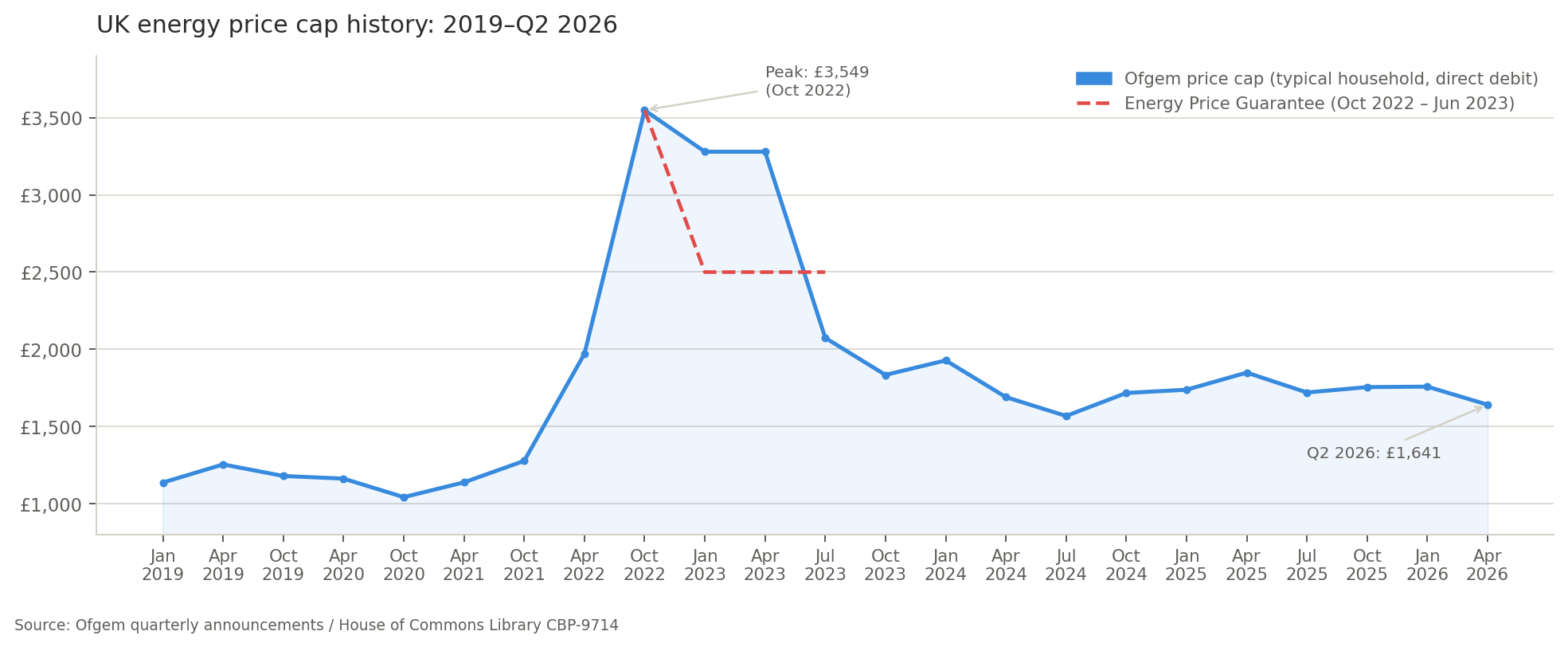
Every unit of electricity your panels generate is electricity you don’t have to buy from the grid. At a typical fixed rate of 25p/kWh, a well-sized system saving 3,000 kWh per year delivers £750 in annual savings. If electricity rates creep back upward - which analysts consider entirely plausible - that same system becomes proportionately more valuable, with no change to the hardware on your roof.
On top of bill savings, the Smart Export Guarantee (SEG) pays you for surplus electricity exported to the grid. Ofgem requires all major licensed suppliers to offer a tariff, but rates are set competitively by the market. The best open fixed rate currently stands at around 16.5p/kWh, with most major suppliers offering 10–15p/kWh, providing a meaningful secondary income stream.
Homeowners with a battery can access time-of-use tariffs offering significantly more. Octopus Flux Export, for example, pays up to 30p/kWh during the 4-7pm peak demand window. As rates vary and change frequently, it’s worth comparing tariffs via Ofgem’s SEG supplier list before registering. The DESNZ Solar Road Map estimates the average homeowner can reduce their energy bills by around £500 per year through rooftop solar PV and that figure rises as grid electricity becomes more expensive.
What the Government Is Doing to Help with Affordability
This is where the picture has genuinely improved in 2026, and it’s important that homeowners understand what’s available to them.
The Government’s Warm Homes Plan, launched in January 2026, is the largest energy efficiency funding initiative in UK history - a £15 billion commitment to upgrade up to 5 million homes by 2030.
For lower-income households, the Warm Homes: Local Grant is already live and offers up to £15,000 towards energy improvements including solar panels and batteries. Broadly, you need to own or rent a privately-owned home with an EPC rating of D or below and a combined household income under £36,000 although thresholds vary by local authority. The grant launched on April 1, 2025 and runs until 2028 for eligible households.
For homeowners who don’t qualify for grants, the Government is developing 0% interest loans through the Warm Homes Fund, intended to make solar accessible regardless of income. Full details are still being finalised, with the scheme expected to be fully operational in 2027. If you’re planning ahead, this is worth keeping an eye on.
The 0% VAT relief, in place since April 2022, runs until 31 March 2027 and applies to everyone with no income threshold, no application required. On a £6,500 system, this alone represents over £1,000 in savings.
If you’re in Scotland, Home Energy Scotland grants offer a £1,250 grant plus an interest-free loan of up to £4,750 for households with incomes under £36,000. Wales has the NEST scheme for lower-income households. And wherever you are in the UK, all homeowners with MCS-certified systems can register for the Smart Export Guarantee.
One word of warning: if someone cold-calls or knocks on your door claiming to offer government-funded “free solar panels”, be very cautious. Legitimate Warm Homes grants work through councils and approved local authorities not door-to-door salespeople.
Should You Wait, or Act Now?
This is the question every homeowner considering solar is wrestling with right now, and there’s no universal right answer. But here are some considerations on both sides.
The case for acting sooner:
- Installer lead times are growing as demand increases.
- The 0% VAT window closes in March 2027.
- Labour cost inflation means quotes may be higher in 6 - 12 months’ time.
- The sooner you install, the sooner you start generating savings including before the next energy price cap announcement, which Ofgem will confirm on 27 May 2026 for the Q3 period.
- Locking in your installation now also locks in your DNO application position, which matters given growing wait times.
The case for taking your time:
- Hardware prices have stabilised after earlier disruptions.
- There’s no acute equipment shortage right now.
- The forthcoming Warm Homes Fund 0% loan scheme, if it arrives as planned in 2027, could provide more flexible financing than what’s currently available.
- If you’re in the window between “seriously considering” and “ready to commit”, there’s no need to rush into a decision.
What not to do in either case: Don’t be panic-sold. This market attracts high-pressure sales tactics. “£8,000 off this week only” is never a real offer. Take time to get at least three quotes from MCS-certified installers, check reviews independently, and make a decision that works for your home and your finances.
The value of solar is real and well-evidenced, but only when you choose the right system and the right installer.
Your Next Step: Find Out What You’re Entitled To
Before anything else, it’s worth checking whether you qualify for support under the Warm Homes: Local Grant or other available schemes. A significant number of homeowners who assume they won’t qualify find that they do - particularly if your home has an EPC rating of D or below.
👉 Check your eligibility for the Warm Homes: Local Grant on the Government’s official website
Even if grants don’t apply to you, understanding all your options; 0% VAT, SEG payments, future 0% loan financing. This puts you in a much stronger position when you’re ready to get quotes.
Solar isn’t becoming unaffordable. But the landscape is more layered than it once was, and the decisions you make going in, on timing, on grants, on choosing an installer, have a real bearing on the outcome. The more informed you are, the better the result.