A home battery is one of those purchases that sounds straightforward until you start researching it. Within minutes you’re reading about arbitrage, virtual power plants, EPS mode, and half-hourly export rates. For most homeowners, the appeal is much simpler: the electricity bill is too high, and a battery feels like part of the answer.
This guide cuts through the complexity. There are four genuinely useful things a home battery can do for you. Understanding each one clearly will help you decide whether a battery makes sense for your home, and what kind of setup you actually need.
1. Store Your Solar Generation for Later
The most obvious use of a home battery, at least for those households with solar panels, is capturing surplus daytime generation to use in the evening.
Without a battery, solar panels generate electricity throughout the day and whatever the home doesn’t use at the moment of generation can be exported to the grid, earning a few pence per unit through the Smart Export Guarantee. That’s useful, but it could mean effectively selling electricity cheaply in the afternoon only to buy it back at peak prices in the evening.
Illustrative typical summer day, 4kW south-facing system, average UK household. Actual figures vary by season, location, and usage habits.
A battery brings another option to the table. Surplus solar can charge the battery during the day. When the sun goes down and household demand rises, the battery discharges instead of needing to draw from the grid. This means using generated electricity rather than buying it at 24-25p per kWh.
The improvement in self-consumption varies by household, but as a rough guide a 10kWh battery added to a typical 4kWp solar system can increase the proportion of solar electricity used directly from around 30-40% up to 70-80%. That shift has a meaningful impact on how much you spend on electricity over the year.
Illustrative self-consumption split for a typical 4kWp system with average UK household usage. Actual figures vary by household usage patterns, system size, and battery capacity.
The economics work best for households with higher evening electricity use: families with children, people who work from home, and homes with electric heating. If your household draws heavily on the grid between 5pm and 10pm, a solar battery is doing exactly the job it was designed for.
2. Charge Cheaply Overnight, Use Electricity at Peak Rates
A battery doesn’t have to rely solely on solar to be financially worthwhile. With the right electricity tariff, you can charge your battery from the grid at low overnight rates and use that stored electricity during the day when grid rates are higher.
The principle is simple. Standard electricity costs around 24 to 25p per unit under the current Ofgem price cap. Time-of-use tariffs offer significantly cheaper rates during off-peak periods, typically overnight when grid demand is low and renewable generation is often high.
Intelligent Octopus Go, for example, offers an off-peak rate of around 8p per kWh between 11:30pm and 5:30am - roughly three times cheaper than the standard price cap rate. Fully charging a 10kWh battery overnight 80p and then using that electricity during the day instead of buying at 25p saves around £1.70 per full cycle. Over a year, with regular overnight charging, that adds up to over £600 of savings.
This approach works independently of solar. A battery-only household without panels can still benefit meaningfully from time-of-use tariffs, though the savings are typically smaller and the payback period longer than for a combined solar and battery setup.
The key requirement is a smart meter with half-hourly reading capability, which most UK homes now have or can request from their supplier. Without it, time-of-use tariffs are not accessible.
3. Backup Power During a Grid Outage
This is the benefit that most people assume they’re getting when they install a battery but often aren’t. Understanding the distinction matters before you spend money.
A standard battery connected to a grid-tied solar system will shut down during a power cut, for the same safety reason as the solar panels themselves: to protect DNO engineers working on the network from live wires. Simply having a battery does not mean having backup power.
Genuine backup capability requires a hybrid inverter system with Emergency Power Supply (EPS) hardware properly installed. When the grid fails, the system isolates your home electrically and continues supplying power from the battery and, if the sun is shining, from your solar panels too. The transition typically happens in under 20 milliseconds.
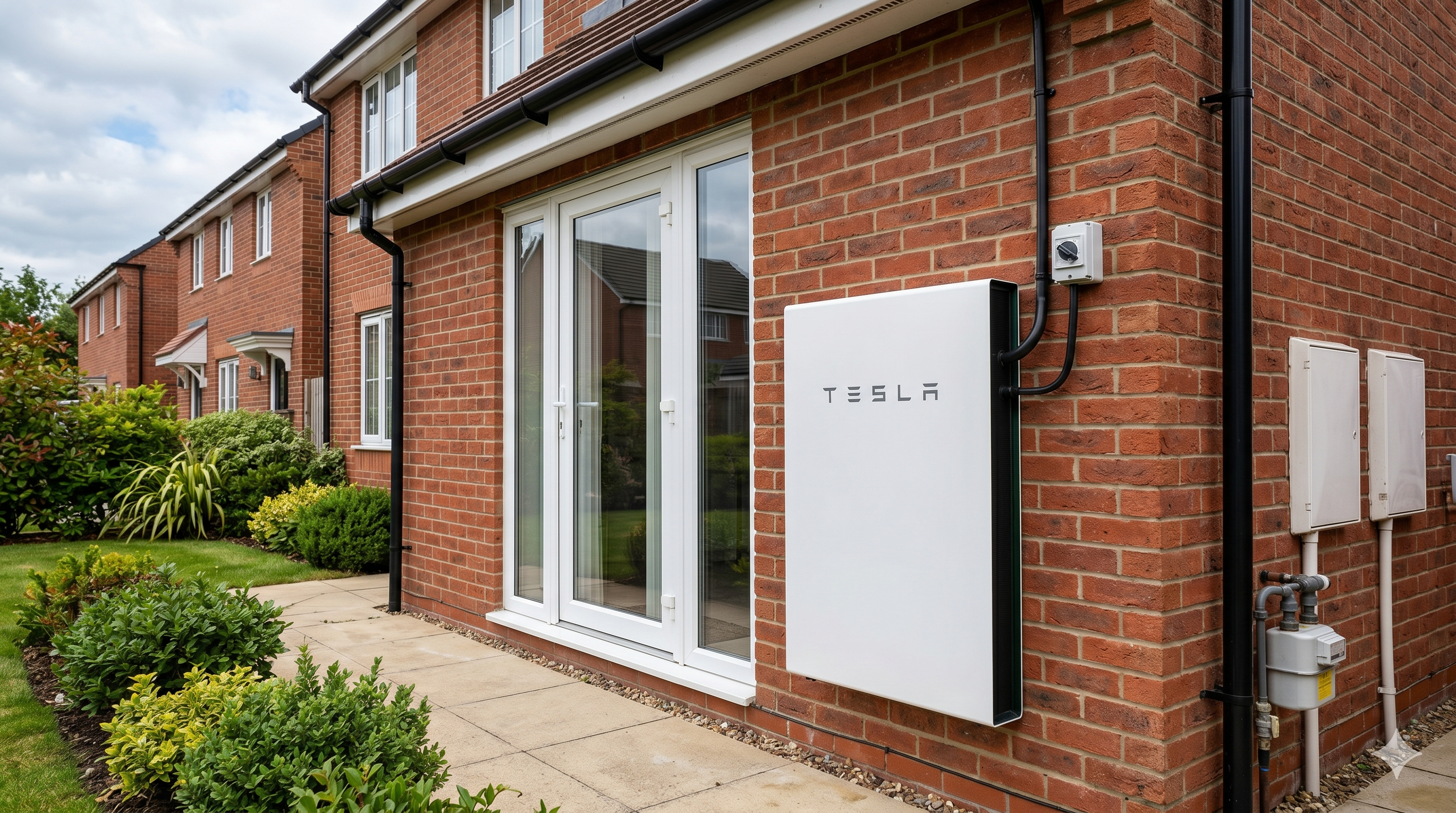
The hardware that enables this varies by system. The Tesla Powerwall 3 includes whole-home backup as standard through a separate Gateway unit. The Sigenergy SigenStor requires the optional Sigen Energy Gateway to deliver backup, but supports both single-phase and three-phase supplies and offers a claimed 0ms switchover time.
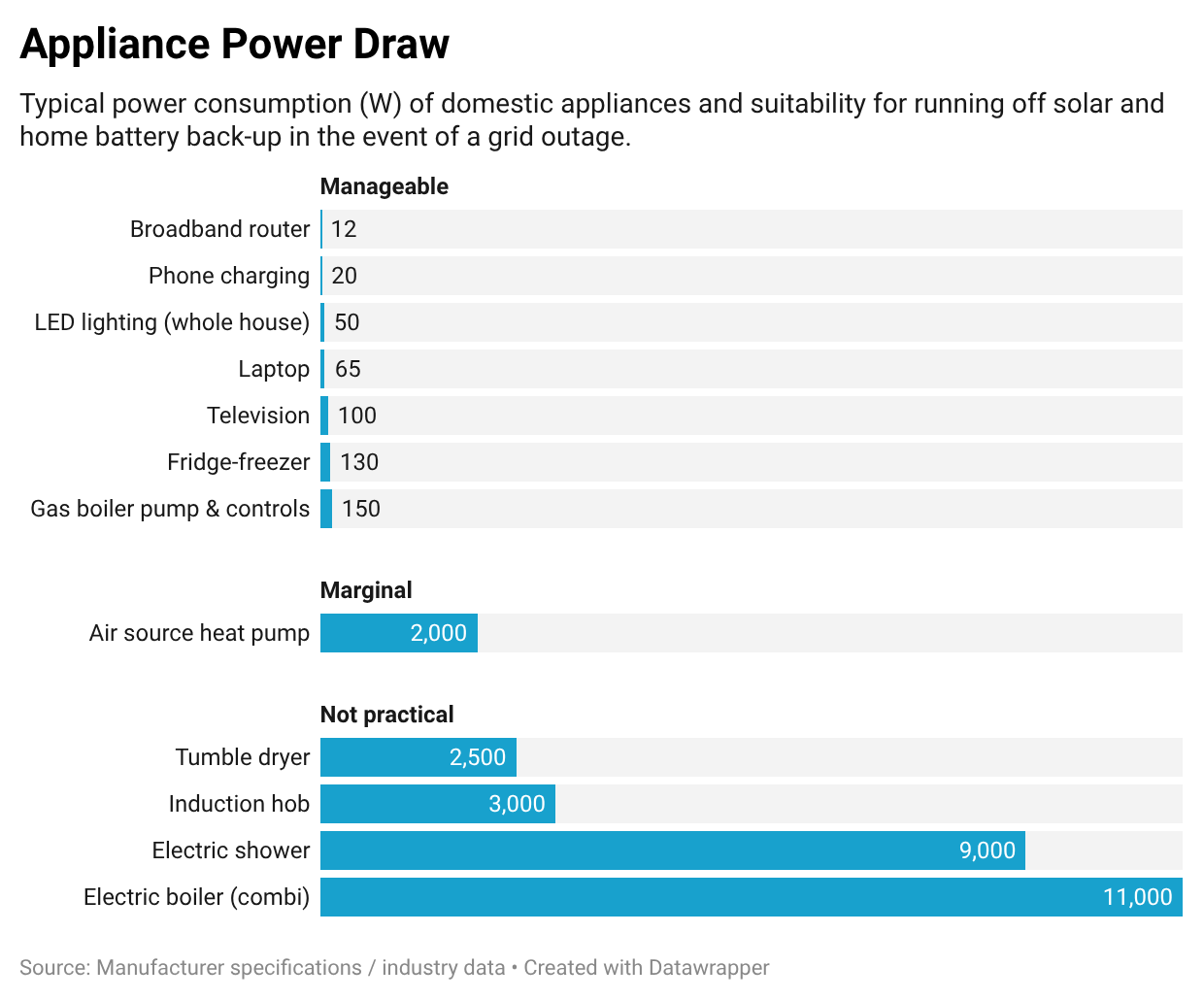
The practical question is what you actually need to keep running during an outage. A broadband router draws around 12W, a fridge-freezer around 130W, phone charging around 20W, and basic lighting perhaps 50W. Together, those essentials draw well under 300W. A 10kWh battery could sustain them for over 30 hours. Air source heat pumps, electric showers, and induction hobs draw far more and are generally not practical to run on backup power.
If backup capability matters to you, specify it clearly when getting quotes. It is not automatically included in all battery installations and requires specific wiring as well as compatible hardware. Ask each installer whether the system they are proposing supports whole-home or essential-circuit backup and whether the necessary components are included in the quoted price.
4. Energy Arbitrage: Buying Low, Selling High
Arbitrage sounds like something that belongs in a trading room rather than a kitchen, but the concept as it applies to home batteries is straightforward: charge your battery when electricity is cheap, then either use it when electricity is expensive or export it to the grid for a higher rate than you paid.
The difference between this and simple off-peak charging is that arbitrage specifically involves exporting at a profit, not just avoiding expensive imports. For this to work, you need a tariff that offers meaningfully different import and export rates at different times of day, and a smart meter that records half-hourly data.
Octopus Flux, before it closed to new customers in March 2026, was the clearest example of a purpose-built arbitrage tariff for solar and battery households: import rates were lowest between 2am and 5am, and export rates were highest between 4pm and 7pm, enabling households to charge relatively cheaply overnight and sell back at a premium during the evening peak. Existing Flux customers remain on the tariff, but it is currently unavailable to new signups.
For households looking to maximise export income in 2026, Agile Outgoing is currently the main alternative for solar battery owners, offering half-hourly export rates linked to wholesale prices that can spike considerably during peak demand periods. The tradeoff is variability: average rates are lower than Flux’s peak export rate, but active management or automation can capture the best windows. Intelligent Octopus Flux, which automates battery scheduling to target the 4pm to 7pm peak window, remains available and is compatible with Tesla Powerwall, GivEnergy, FoxESS, and Sigenergy systems.
It is worth being clear-eyed about the arbitrage opportunity in 2026. The financial gains are real but not transformative for most households. The bigger value still sits in the combination of solar self-consumption and off-peak overnight charging. Arbitrage is a meaningful add-on rather than the primary reason to buy a battery.
One nuance worth understanding: not all energy suppliers permit or facilitate active arbitrage, and the terms of export tariffs vary. Always check the current eligibility requirements and rate structure before choosing a tariff, as these change more frequently than the hardware does.
Putting It Together
The four benefits above are not mutually exclusive. A well-designed solar and battery system on the right tariff can deliver all of them simultaneously: storing solar during the day, topping up from cheap grid power overnight, providing backup when the grid fails, and earning from exports during peak periods.
How much value you extract from each depends on your household’s usage patterns, your roof’s solar generation, the battery capacity you choose, and whether you’re willing to engage with a smart tariff or prefer a simpler set-and-forget approach.
The honest starting point is to understand your own electricity usage before deciding on battery capacity. A 10kWh battery is meaningful for a household using 15 to 20kWh per day. It is oversized for a small home using 8kWh and potentially undersized for a large home with an EV and heat pump.